No products in the cart.: $0.00

How to Clean a Suede Jacket Without Ruining It
A suede jacket earns its place fast. It brings texture to a clean streetwear fit, softens a sharp biker look, and gives cold-weather layers a richer finish than standard fabric ever could. But learning how to clean a suede jacket matters because suede does not respond well to the usual laundry-day routine. Too much water, the wrong cleaner, or aggressive scrubbing can leave behind stiff patches, water rings, faded color, or a flattened nap.
The good news is that most everyday marks can be handled at home with patience and the right technique. The goal is not to soak suede until it looks new. The goal is to lift dirt, treat the stain in front of you, and bring back that velvety surface that makes the jacket stand out.
First, Check What You Are Actually Cleaning
Before grabbing a brush or cleaner, look at the care label. Genuine suede is made from the underside of animal hide and has a soft, open texture. It needs dry, controlled cleaning. Faux suede, often labeled microfiber or synthetic suede, may tolerate a lightly damp cloth better, but the label still gets the final word.
Also check whether your jacket has leather trim, shearling panels, embroidery, painted graphics, metal hardware, or a quilted lining. A simple tan suede trucker jacket is easier to spot-clean than a color-blocked racing style with patches and mixed materials. Treat the most delicate material as the priority.
If the jacket is vintage, heavily soiled, stained across a large area, or marked by ink, paint, grease, or mystery liquid, professional suede cleaning is the smarter move. Home care is excellent for maintenance and small accidents. It is not always the right call for a high-stakes rescue.
What You Need to Clean a Suede Jacket at Home
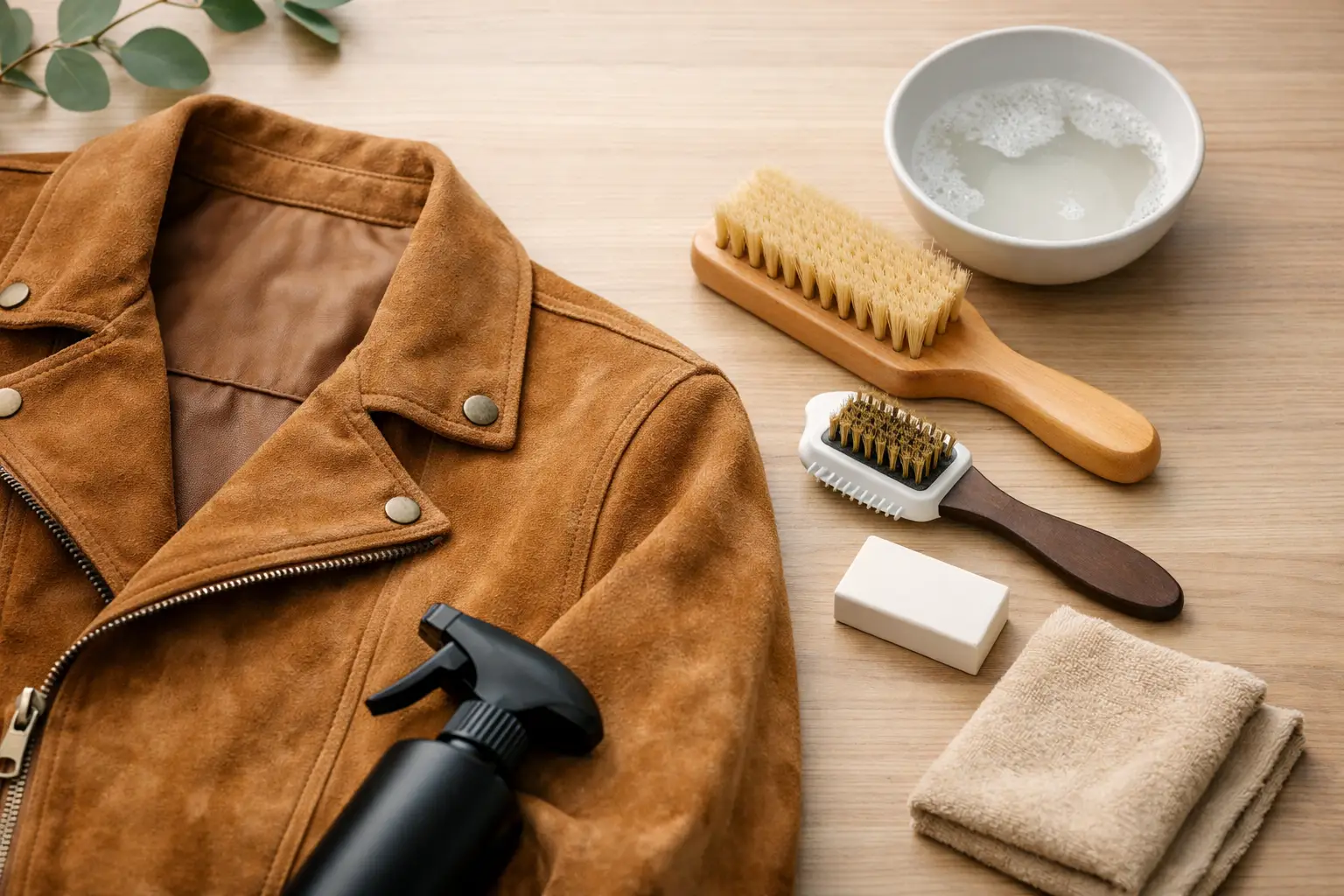
Keep the setup simple. Specialized suede tools work best because they clean the fibers without pulling or scratching the hide. For routine care, gather these essentials:
- A suede brush with soft brass or nylon bristles
- A clean white microfiber cloth or soft towel
- A suede eraser or plain white pencil eraser
- White vinegar or rubbing alcohol for targeted stain treatment
- Cornstarch or baking soda for fresh oil-based spots
Avoid colored cloths, harsh household sprays, dish soap, bleach, laundry detergent, and leather creams designed for smooth leather. They can transfer dye, create uneven dark spots, or clog the suede’s surface. Suede needs its own playbook.
How to Clean a Suede Jacket: Start With a Dry Brush
Lay the jacket flat on a clean towel or hang it where you can work around the shoulders, sleeves, and back panel. Make sure it is completely dry before you begin. Brushing wet suede can push dirt deeper into the fibers and damage the nap.
Use a suede brush to sweep gently in one direction. This removes surface dust and loosens dry dirt trapped in the fibers. Work in small sections, especially around cuffs, pockets, the collar, and the hem, where body oils and city grime tend to build up.
Once the jacket looks cleaner, brush lightly back and forth only on areas where the nap has become matted. Do not attack the fabric with heavy pressure. Think of it as resetting the texture, not sanding down a stain. A few calm passes are usually enough.
For a jacket you wear often, a quick dry brush after every few outings prevents dullness from becoming a bigger cleaning job. This is especially useful for suede bombers, truckers, and biker jackets worn through fall and winter.
Remove Scuffs and Small Dry Marks
A suede eraser is one of the best tools for small scuffs, dark rub marks, and dry spots. Rub the affected area gently with short, controlled strokes. The mark may look slightly rough while you work. That is normal.
Brush away the eraser residue, then check the area in natural light. If the scuff is still visible, repeat once or twice instead of rubbing harder. Excess friction can create a noticeably lighter patch, particularly on black, navy, burgundy, or deep brown suede.
No suede eraser? A clean white pencil eraser can work in a pinch. Skip pink or colored erasers, which may leave pigment behind.
Treat Water Spots Without Soaking the Jacket
Water spots are frustrating because they often show up after a surprise drizzle, snow melt, or a splash from the street. The fix sounds counterintuitive: you need to make the moisture look even again, not drench the jacket.
Lightly dampen a clean white cloth with water. Blot around the edge of the spot, gradually blending outward rather than concentrating moisture directly in the center. Your cloth should be barely damp, never dripping. Then blot the area with a dry towel to absorb excess moisture.
Let the jacket air-dry naturally, away from radiators, hair dryers, fireplaces, and direct sunlight. Heat can shrink the hide, harden the fibers, and shift the color. Once dry, brush the area to lift the nap back into place.
If a water mark covers most of the jacket or appears in several panels, resist the temptation to wet the whole piece. That is a job for a suede-care professional.
Handle Oil, Grease, and Food Stains Fast
Fresh oil stains need absorbent powder, not water. If you drop fries, pizza oil, lip balm, or bike-chain grease on your jacket, gently blot the spot with a dry white cloth. Do not rub. Rubbing spreads the oil and drives it further into the suede.
Cover the stain with cornstarch or baking soda and let it sit for several hours, ideally overnight. The powder helps draw out the oil. Brush it away gently the next day, then repeat if needed. A faint remaining shadow may lift after a second treatment.
For an older grease mark, the trade-off changes. Home treatment can improve it, but repeated powder applications and scrubbing may make the surrounding nap look uneven. If the stain sits on a highly visible chest panel or sleeve, professional cleaning may protect the jacket’s overall look better than a DIY experiment.
Use Vinegar or Rubbing Alcohol for Stubborn Spots
White vinegar and rubbing alcohol can help with salt lines, water marks, and certain sticky surface stains because they evaporate quickly. Still, suede can react differently depending on its dye and finish, so always test first.
Dab a tiny amount onto a hidden area, such as the inside hem or behind the collar. Let it dry completely. If the color and texture look unchanged, dampen the corner of a white cloth with a small amount of vinegar or rubbing alcohol. Blot the stain gently, working from the outer edge toward the center.
Do not pour liquid directly on the jacket. Do not scrub. Let the area dry fully, then brush the nap. If the mark remains after two careful attempts, stop there. More product is not more power with suede.
Clean the Lining and Collar Carefully
The lining often holds more odor and everyday buildup than the suede exterior. Turn the jacket inside out if the construction allows it, then wipe the lining with a lightly damp cloth. For a washable synthetic lining, a tiny amount of mild soap may be appropriate, but only if the care label permits it.
The collar deserves special attention because it picks up skin oils, makeup, hair product, and fragrance. Brush the suede first. If there is visible buildup, use the vinegar or rubbing alcohol spot method sparingly after testing it in a hidden area. Let it air-dry fully before wearing.
Never spray perfume, body spray, or deodorizer directly onto suede. The liquid can stain, and the fragrance may settle into the hide instead of disappearing.
Drying and Restoring the Suede Nap
After any spot treatment, shape the jacket on a broad, padded hanger and let it dry in a cool, well-ventilated room. Keep it out of direct sun. A narrow wire hanger can distort the shoulders, which is the last thing a structured jacket needs.
When the suede is fully dry, brush it again with light strokes to restore the soft, even finish. If the fibers still feel a little flat, use a suede brush with slightly firmer bristles, but work slowly. This final step makes a major difference in whether the jacket looks freshly cared for or simply dried after a stain.
Protect Your Suede Jacket Before the Next Wear
A suede protector spray made specifically for suede and nubuck can help repel light moisture and make future stains easier to handle. Apply it outdoors or in a well-ventilated space, holding the can at the recommended distance. Use light, even passes rather than saturating the material.
Test the spray in a hidden spot first, especially on dyed suede. Let the jacket dry completely before wearing it. Reapply protection after cleaning or at the start of a season when the jacket will see regular use.
For storage, use a breathable garment bag or leave the jacket uncovered in a cool closet with room around it. Plastic traps moisture, while cramped storage can crush the nap and crease the sleeves. Keep suede away from direct sunlight and do not store it beside damp outerwear.
Your suede jacket is built to bring character to the outfit, whether you wear it with denim, cargo pants, boots, or a clean all-black fit. Give it a few minutes of smart care when it needs it, and that signature soft texture will keep showing up strong season after season.