No products in the cart.: $0.00

How Should a Leather Jacket Fit? Get It Right
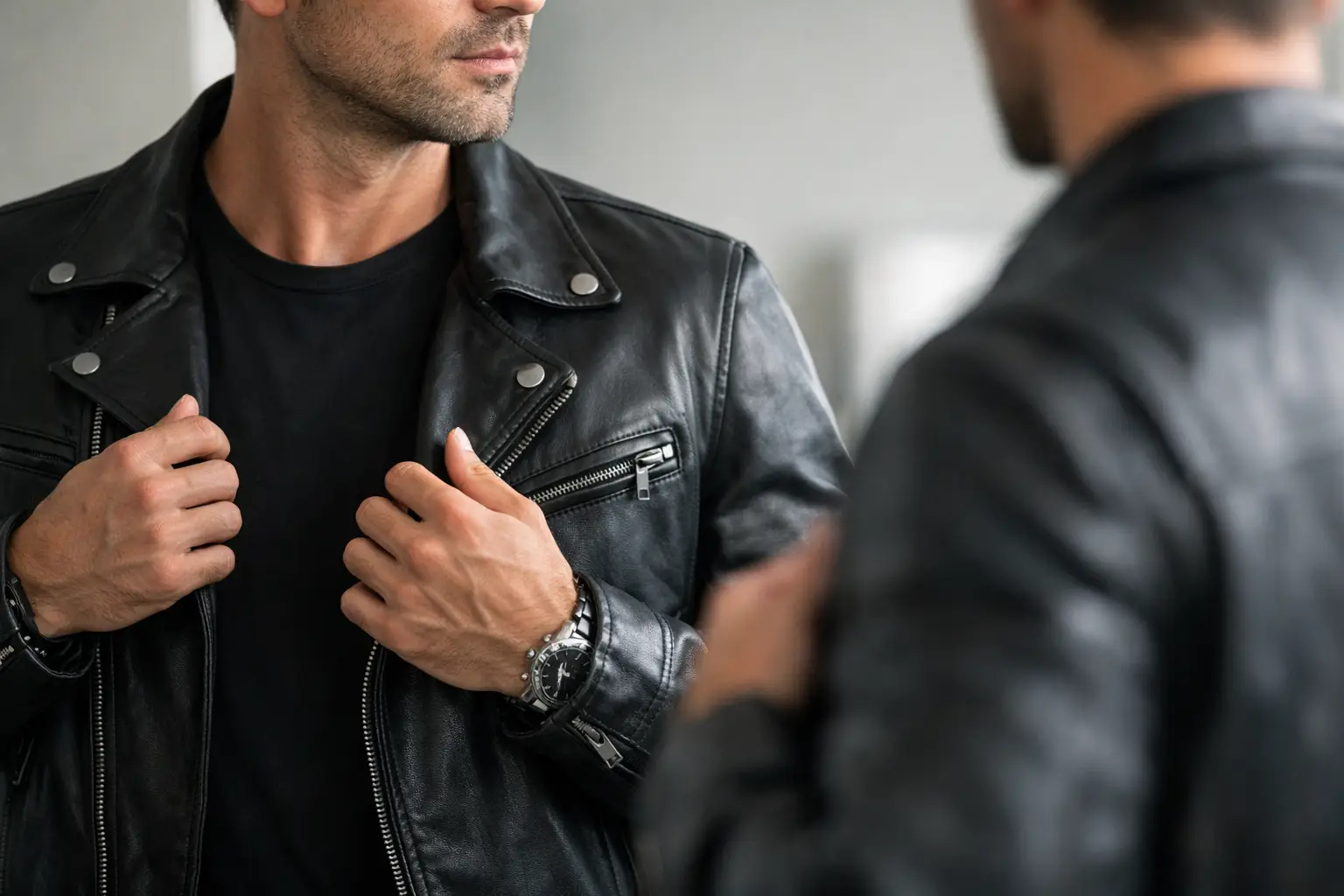
A leather jacket can be the sharpest piece in your rotation – or the one that makes every outfit feel slightly off. The difference usually comes down to fit. If you are asking how should a leather jacket fit, start with this rule: it should feel close and intentional without restricting your movement. Leather is structured, heavier than a typical overshirt, and made to hold its shape, so a jacket that is too big rarely settles into a better look.
The right fit lets you move, layer lightly, and carry the jacket with confidence. Whether your style is classic biker, sleek café racer, relaxed bomber, vintage varsity, or shearling-lined winter leather, the details change. The core checkpoints do not.
How Should a Leather Jacket Fit at the Shoulders?
Shoulders are the first place to check because they determine how the entire jacket hangs. The shoulder seams should sit at the edge of your natural shoulders, where your shoulder slopes into your upper arm. A small amount of variation is normal with dropped-shoulder or intentionally oversized streetwear styles, but a traditional leather moto jacket should not have seams hanging halfway down your biceps.
If the shoulders are too wide, the sleeves will look long and the chest can bunch when you zip up. The jacket may feel comfortable standing still, yet look loose and unshaped in motion. If the shoulders are too narrow, you will feel pulling across your upper back and chest when you reach for a steering wheel, lift your arms, or simply cross them.
Leather does relax with wear, but it does not grow a full size. Do not buy a jacket with tight shoulders hoping it will stretch into a perfect fit. Break-in can soften the material and create a more personal feel, but it cannot fix a fundamentally wrong frame.
The Chest Should Feel Snug, Not Strained
A well-fitted leather jacket sits close to the chest and torso, especially in a biker, racer, or tailored blazer silhouette. You should be able to zip or button it without fighting the closure. Once fastened, it should lie flat instead of pulling into deep horizontal creases across the chest or back.
Try a simple movement test. Wear the top you expect to wear most often – usually a T-shirt, henley, thin sweater, or hoodie depending on the jacket – then zip up. Take a deep breath, sit down, reach forward, and move your arms as if you were riding. Mild resistance is normal with a new leather jacket. Pinching, painful tension, or a zipper that visibly strains is not.
There is a trade-off here. A slim café racer has a cleaner, more polished profile, but it offers less room for a heavyweight hoodie underneath. A relaxed bomber gives you space to layer and creates an easier streetwear look, though too much extra fabric can hide the jacket’s shape. Buy for the way you will actually wear it, not for an imagined outfit you put on once a year.
Can You Wear a Hoodie Under a Leather Jacket?
Yes, but choose the jacket for that purpose. If a hoodie is part of your everyday cold-weather uniform, favor a slightly roomier bomber, trucker, or relaxed biker cut. A fitted double-rider can work over a thin hoodie, but sizing up solely to fit a bulky sweatshirt may leave the shoulders and sleeves too large.
A better move is to use a lighter hoodie or sweatshirt and keep the jacket’s shoulder fit accurate. For serious winter layering, a leather jacket with a quilted lining, shearling trim, or insulated build offers warmth without forcing you into an oversized silhouette.
Check the Sleeve Length and Arm Shape
Leather jacket sleeves should generally end at your wrist bone, or just below it, when your arms rest naturally at your sides. A little extra length is common on motorcycle styles because sleeves rise when you reach for handlebars. On a fashion-forward cropped biker, the sleeves may stop more cleanly at the wrist.
When you bend your elbows, the cuffs should not pull halfway up your forearms. At the same time, sleeves that cover most of your hands look oversized unless that is the deliberate style. Watch for excessive folds around the upper arm and elbow. Some creasing is part of real leather’s character. Large pools of leather usually mean the sleeve is too long or wide.
Armholes matter, too. Higher armholes often make a fitted jacket easier to move in because the body stays closer as you lift your arms. Low, oversized armholes can be comfortable, but they can also cause the whole jacket to rise when you reach. Neither is automatically wrong – it depends on whether you want a sharp, body-conscious fit or a relaxed, layered look.
Where Should a Leather Jacket End?
Length changes the attitude of a jacket fast. Most classic leather biker jackets and café racers should end around your belt line or upper hip. This shorter cut is not a mistake. It creates the iconic, confident shape that works with denim, cargos, boots, and sneakers.
A bomber usually lands at the hip, with a ribbed hem that hugs lightly rather than squeezing. A leather trucker can run a little longer, often finishing near the mid-hip. Leather blazers and car coats are designed for more coverage and should fall lower, usually past the hip, to keep their tailored proportions intact.
If you are taller, do not assume you need to size up for length. Going up a size can throw off the shoulders and chest. Look for a silhouette with a naturally longer body instead. If you have a shorter torso, a cropped biker or fitted bomber can make your legs look longer, while an overly long jacket may overwhelm your frame.
The Hem Should Sit Close Without Riding Up
At the waist, the jacket should follow your shape without feeling cinched unless it has an adjustable belt or a rib-knit waistband designed to fit that way. A moto jacket may look slightly tapered at the waist, while a bomber should have a soft blouson effect above its ribbed hem.
Raise your arms, sit in a chair, and walk around for a minute. If the hem constantly rides high or the back exposes more than you want, the body may be too short or the jacket may be too tight through the chest. If the hem flares away from your body and makes a wide box shape, the jacket could be too large – or simply a boxier cut that does not suit the look you are after.
For belted biker jackets, the belt is there to refine the fit, not rescue an oversized size. You should be able to adjust it comfortably without creating thick folds at the back.
Leather Type Changes the Fit Expectation
Not every leather jacket should fit the same way. A soft lambskin jacket drapes more easily and can feel comfortable in a close fit right away. Cowhide is tougher and more substantial, often taking longer to break in. It may feel firmer at first, particularly in a motorcycle-inspired jacket, but it should never feel restrictive in the shoulders or chest.
Faux leather generally has less give than many natural leathers and may not mold to your body in the same way. Check the size chart carefully and prioritize movement from day one. Suede has a softer, more casual visual weight, so it often looks great with a touch more ease through the body.
Shearling and shearling-lined leather need extra room because the interior adds bulk. A shearling aviator that fits like a thin lambskin racer will likely feel too tight once you zip it. In this case, a little more space is practical and still looks right.
A Quick Fit Check Before You Commit
Before removing tags or taking your new jacket out for the night, assess the complete fit rather than focusing on one measurement. A jacket earns its place in your wardrobe when all of these points work together:
- The shoulder seams align with your natural shoulder line.
- You can zip or button the jacket over your usual base layer without strain.
- The sleeves reach your wrists and still allow comfortable arm movement.
- The body length suits the jacket style, from cropped biker to longer leather coat.
- The jacket looks balanced from the side and back, not just in a front-facing mirror.
Take a photo or short video while moving. Fit problems are often easier to spot on camera than in a fitting-room pose. Check how the collar sits, whether the back pulls, and whether the jacket still looks like your style when you are not standing perfectly still.
Should You Size Up or Down in a Leather Jacket?
If you are between sizes, use the shoulders and chest as your deciding factors. Size down only when the larger option has clearly dropped shoulders, overly long sleeves, and too much room through the torso. Size up when the smaller option pulls at the chest, locks up your arm movement, or cannot accommodate the layer you genuinely plan to wear.
Do not chase an ultra-tight fit because it looks sharp in a mirror for ten seconds. The best leather jacket feels powerful because you can live in it. You should be able to drive, meet friends, head to a game, jump on your bike, or layer up for a cold night without thinking about your clothes.
A great leather jacket does not need to feel baggy to feel comfortable, and it does not need to feel restrictive to look tough. Get the shoulders right, keep the body purposeful, and choose the silhouette that matches your everyday energy. That is how a jacket stops being just another layer and starts feeling like your signature piece.